

Gonzo’s Quest: Avalanche mechanics and bonus modes explained
Gonzo’s Quest is a classic NetEnt video slot that still feels modern in 2026 because its core idea—Avalanche wins—changes how a single paid round can develop. Instead of one-and-done spins, winning symbols are removed and replaced by new ones falling into place, so a single stake can generate several connected payouts. The game runs on a 5×3 grid with 20 fixed paylines and is commonly listed with an RTP of 95.97%.
How the Avalanche mechanic changes the maths
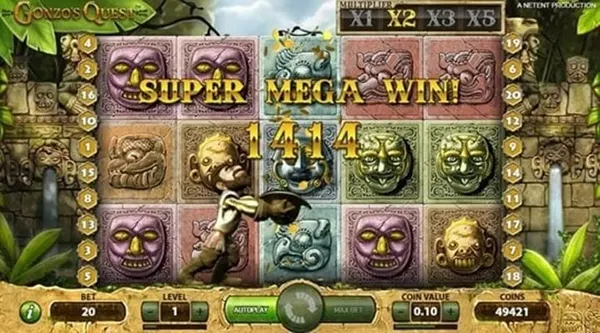
In a standard slot, the reels stop once and the result is final. In Gonzo’s Quest, a paid round can “continue” if it produces a win: the winning symbols disappear, the remaining symbols drop down, and new symbols fall from above. If the new layout creates another win, the process repeats. This means the value of a round is not just about the first hit, but about whether it can chain into two, three, or more cascades.
The key balancing lever is the multiplier that increases with each consecutive Avalanche in the same paid round. In the base game, that multiplier typically steps up from 1x and rises with each additional cascade (commonly up to 5x) before resetting when the chain ends. Practically, that creates a familiar pattern: many rounds are quiet, some pay modestly, and a smaller number produce the “long” Avalanche sequences that do the heavy lifting for returns.
This structure also explains why the slot’s variance can feel punchy even when you are seeing frequent small hits. The base-game wins can be chopped into several small cascades, while the bigger moments come from (a) getting multiple Avalanches in a row and (b) having those cascades land with premium symbols or Wild involvement. If you treat each paid round as having a chance to extend itself, the pacing makes more sense.
Reading the paytable and symbol behaviour
Gonzo’s Quest uses standard video-slot building blocks, but the details matter. The Wild is Gonzo himself and substitutes for regular symbols to complete line wins. Because of the Avalanche mechanic, a Wild that lands in a helpful spot can influence not only the first hit, but also what happens after the drop—especially if it contributes to a second or third cascade.
Paylines are fixed, so you are not adjusting line count mid-session; the main control is your stake size. That makes it easier to compare results across sessions, because “one round” always covers the same line structure. When you review outcomes, focus on whether your wins are mostly single-step hits (one cascade) or whether you are occasionally getting multi-step chains that push the multiplier upwards.
The Scatter symbol is tied to the Free Falls feature, and the trigger is positional rather than random across all reels. In practice, you are watching the left side of the grid: the bonus is commonly described as requiring Scatters across the first three reels in the same round. That specific trigger design is one reason players often feel the bonus is “near-miss heavy” on reel 3.
Free Falls bonus: triggers, rules, and expectations
The Free Falls bonus is the main feature round and it keeps the Avalanche mechanic running, but with a more aggressive multiplier ladder. The bonus is commonly described as starting with 10 Free Falls when Scatters land across reels 1–3 in the same paid round. Unlike many modern releases, this is a straightforward free-round mode without side missions, collectors, or buy-in menus.
Where the bonus earns its reputation is the multiplier behaviour. In Free Falls, the multiplier typically starts higher than the base game and climbs as consecutive Avalanches continue, commonly stepping through 3x, 6x, 9x, 12x and up to 15x. The practical implication is simple: the bonus does not need a huge symbol hit to feel meaningful—what it needs is continuity, because each extra cascade raises the ceiling for whatever lands next.
It is also widely noted that Free Falls can retrigger if the relevant Scatter pattern appears again during the bonus. That adds another layer of variance: some bonuses end quickly with limited chains, while others extend and become the sessions you remember. If you are assessing this slot for bankroll fit, judge it by the “average bonus” you actually see, not the highlight bonuses people post online.
Practical approach: session planning and bet sizing
Because the slot’s strongest payouts often come from a small number of extended Avalanche sequences (especially in Free Falls), a cautious approach is to size stakes so you can survive normal dry spells. If you raise stakes too quickly, you reduce the number of rounds you can play, which matters here because the bonus trigger is not something you can force through skill.
It helps to separate “testing” and “playing” sessions. Testing means a smaller stake, a fixed number of rounds, and notes on how often you are reaching Free Falls and how long your Avalanche chains tend to run. Playing sessions can then be adjusted based on what you saw. This keeps you honest: you are responding to the game’s pacing, not chasing a multiplier that might not arrive when you want it.
Finally, remember what the multiplier actually rewards. It does not pay you for time spent; it pays you for consecutive wins in one paid round. That means it is usually better to focus on consistent stake discipline than on reacting emotionally to a near-bonus on reel 3. If you feel yourself increasing stakes because the bonus “must be close”, that is your cue to pause.
Why Gonzo’s Quest still matters in 2026
By 2026, cascading mechanics are everywhere, but Gonzo’s Quest remains a reference point because it introduced the Avalanche feel to a mass audience and still executes it cleanly. The rules are easy to explain, the feedback loop is obvious (win → drop → multiplier), and you can see why you won or lost a chain without needing a tutorial overlay.
From a numbers perspective, the game’s commonly stated RTP of 95.97% remains a useful anchor when comparing older classics with newer high-RTP releases. The more important point, though, is how that return is delivered: this is not a steady drip slot. It concentrates value into chained events, which is why many players describe it as “swingy” even when it produces frequent small wins.
It also fits modern device habits better than many people expect from a 2011-era title. The layout is uncluttered, the symbols are readable on mobile, and the feature set is self-contained. In an era full of complicated bonus ecosystems, there is still value in a game where the main feature is the game mechanic itself.
Original vs Megaways remake: choosing the right version
If you are choosing between the original and the Megaways version, start with volatility tolerance. Megaways typically increases outcome spread by changing the number of ways to win each round, which can make sessions feel sharper—bigger ups, deeper downs. The original is already variable, but its fixed paylines make the behaviour easier to anticipate.
Next, look at what you want from the bonus. The original Free Falls is focused: Avalanche chains plus a clear multiplier ladder up to 15x. The Megaways version adds extra layers (and usually a much higher advertised max-win potential), which can be appealing if you are specifically chasing rare top-end outcomes rather than a cleaner, more repeatable bonus experience.
For many players, the decision is simply about feel. The original is tighter and more “classic NetEnt” in rhythm; the Megaways version is louder, more modern, and more variable by design. If you value clarity and you want to understand the slot quickly, the original still does the job in 2026.