How Push Notifications Influence Player Return Rates in Online Casinos
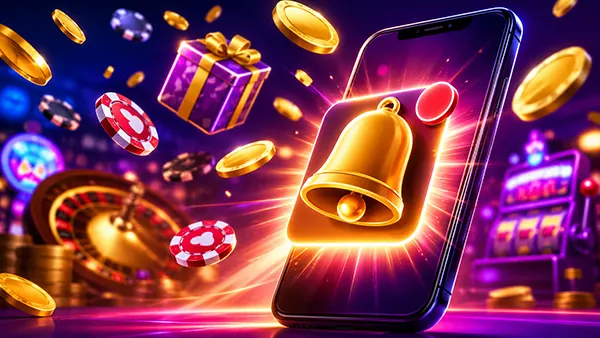
Push notifications have become one of the most widely used communication tools in online casinos. Delivered directly to a player’s mobile device or browser, these messages are designed to inform users about account activity, new promotions, tournament updates, and personalised offers. By 2026, operators increasingly rely on data-driven notification systems to maintain engagement while balancing responsible gambling requirements. Understanding how these messages affect player behaviour helps explain why they remain an important part of customer retention strategies.
Why Push Notifications Have Become a Core Retention Tool
Online casinos operate in a highly competitive environment where players can choose from hundreds of licensed operators. As a result, maintaining regular contact with existing customers is often more cost-effective than acquiring new ones. Push notifications provide a direct channel that reaches users without requiring them to open an email inbox or visit the casino website.
Modern notification systems are powered by behavioural analytics. Casinos can identify when a player has not logged in for several days and send a message tailored to their previous activity. For example, a user who regularly participates in slot tournaments may receive information about a new competition rather than a generic promotional offer.
The speed of delivery is another important advantage. Notifications can be triggered instantly when a new event begins, a bonus becomes available, or a deposit-related promotion starts. This immediacy creates opportunities for operators to reconnect with players at relevant moments rather than relying on scheduled marketing campaigns alone.
Personalisation and Behavioural Targeting
Personalisation has significantly changed the effectiveness of push notifications. Generic messages sent to every customer often generate limited engagement, whereas personalised notifications based on previous preferences tend to achieve higher interaction rates. Casinos increasingly use machine learning systems to determine which content is most likely to attract attention.
Behavioural segmentation allows operators to distinguish between different player groups. High-frequency users, occasional visitors, and dormant customers may each receive different types of messages. This targeted approach helps reduce irrelevant communication and improves the likelihood of a player returning to the casino.
Timing also plays an important role. Data analysis can reveal when individual users are most active, allowing notifications to be delivered during periods when they are more likely to respond. As a result, notification strategies have become increasingly precise compared with the broad campaigns commonly used several years ago.
The Psychological Factors Behind Player Re-Engagement
Push notifications often work because they act as reminders. Many players do not intentionally stop playing; they simply become occupied with other activities. A well-timed message can bring a casino back into a user’s awareness and encourage them to revisit the site or application.
The concept of perceived opportunity also influences engagement. Messages that highlight a limited-time tournament, temporary cashback offer, or loyalty reward can create a sense that a player might miss out on a beneficial opportunity if they do not return promptly.
Another factor is continuity. Players who participate in ongoing tournaments, loyalty programmes, or achievement systems may feel motivated to continue progressing. Notifications that provide updates about their status or rewards reinforce this connection and encourage further participation.
The Role of Rewards and Promotional Messaging
Bonuses remain one of the most common topics used in push notifications. Free spins, deposit matches, cashback offers, and loyalty rewards are frequently promoted because they provide a clear incentive for returning users. However, regulators increasingly require such promotions to be presented transparently and without misleading claims.
Many casinos now combine promotional offers with relevant account information. Instead of sending a standalone bonus message, operators may remind players about unused loyalty points, tournament rankings, or upcoming events that match their interests. This approach often feels more relevant to recipients.
The effectiveness of reward-focused notifications depends heavily on relevance. Frequent messages offering incentives that do not align with a player’s preferences can lead to notification fatigue, causing users to disable alerts altogether. For this reason, quality and targeting generally produce better results than message volume.
Balancing Engagement with Responsible Gambling Standards
Regulatory requirements surrounding gambling marketing have become stricter across many jurisdictions by 2026. Licensed operators must ensure that push notifications do not target self-excluded individuals or encourage excessive gambling behaviour. Compliance systems therefore play an increasingly important role in notification management.
Many operators have introduced controls that limit the number of notifications sent within specific timeframes. These restrictions help reduce excessive messaging and support healthier customer communication practices. Players are also typically given clear options to manage notification preferences or opt out entirely.
Responsible gambling tools are increasingly integrated into notification systems. Alongside promotional messages, some operators provide reminders about deposit limits, account activity, and available player protection features. This reflects broader industry efforts to balance commercial objectives with consumer protection.
Future Trends in Casino Push Notification Strategies
Artificial intelligence is expected to play a larger role in notification optimisation. Advanced algorithms can analyse engagement patterns, predict player preferences, and determine the most suitable timing for communication while respecting regulatory restrictions.
Interactive notifications are also becoming more common. Rather than simply directing users back to an application, future messages may allow players to view tournament standings, loyalty progress, or account updates directly within the notification interface before deciding whether to return.
As competition continues to increase, casinos will likely focus on delivering fewer but more relevant notifications. The most successful strategies are expected to combine personalisation, transparency, and responsible gambling principles, creating communication that benefits both operators and players while maintaining trust over the long term.