
Mini-Games in Slot Machines: How They Influence Payout Distribution
Modern slot machines rarely rely on a single set of reels and paylines. Over the last decade, developers have added various mechanics designed to alter how rewards are distributed during gameplay. One of the most significant of these mechanics is the mini-game. These additional rounds appear when specific symbols or conditions are triggered and temporarily change the structure of the slot. Although they often look like simple entertainment features, mini-games play an important role in how winnings are calculated and delivered. Understanding their function helps explain why two slot sessions with the same stake can produce very different outcomes.
Why Mini-Games Exist in Modern Slot Design
Mini-games were originally introduced to diversify gameplay and prevent slot sessions from feeling repetitive. Early video slots of the 1990s relied mainly on static reels and occasional bonus rounds. As technology improved, developers began incorporating small interactive sequences that allowed players to select objects, spin additional wheels, or unlock hidden rewards. These mechanics added an element of engagement that traditional reel spins could not provide.
From a mathematical perspective, mini-games also allow designers to redistribute part of the slot’s theoretical payout percentage. Instead of awarding all winnings directly through paylines, a portion of the return-to-player value can be reserved for bonus rounds. This approach spreads rewards across different gameplay stages rather than concentrating them solely in the base game.
Another reason mini-games became common is their role in balancing volatility. Slots with complex features often move part of their payout potential into bonus mechanics. As a result, the base game may produce smaller but more frequent wins, while mini-games hold the possibility of larger rewards triggered less often.
How Mini-Games Fit into Slot Mathematics
Every regulated slot machine operates according to a predetermined mathematical model. This model defines the probability of each symbol combination and calculates how the overall payout percentage is distributed across all features. Mini-games are incorporated into this framework as separate probability events that activate under specific conditions.
For example, a slot might allocate 70 percent of its theoretical return to the base game and the remaining 30 percent to bonus rounds or mini-games. When a player triggers such a feature, they access a part of the payout structure that is not available during regular spins. This explains why mini-games often produce larger rewards than standard reel combinations.
The timing of these features is also governed by probability rather than player behaviour. While a mini-game may appear unexpectedly after a series of spins, the trigger frequency is fixed within the slot’s algorithm. This ensures that the overall payout distribution remains consistent across millions of spins.
Common Types of Mini-Games Found in Slot Machines
Not all mini-games function in the same way. Developers use several different structures depending on the style of the slot and its volatility profile. One of the most common formats is the pick-and-win feature, where players choose from hidden objects that reveal cash prizes or multipliers. These rounds introduce an element of choice, although the final outcome is still determined by the slot’s internal calculations.
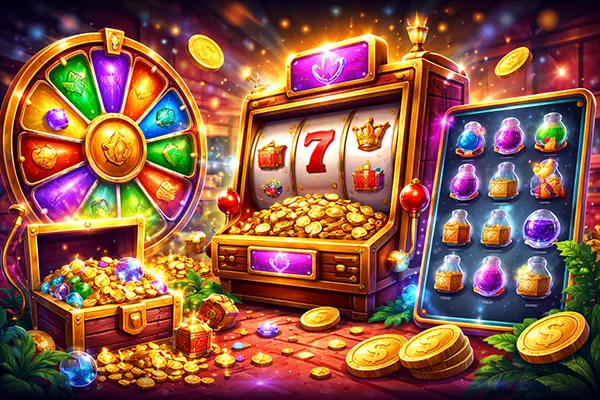
Another widely used format is the wheel bonus. After triggering the feature, players spin a separate wheel containing segments with different rewards. Each segment represents a predefined prize value or multiplier. Although the spinning animation appears dynamic, the final result is already determined by the slot’s random number generator at the moment the feature begins.
Some modern slots also include skill-styled mini-games where players guide characters, collect tokens, or complete short challenges. While these sequences create the impression of active participation, the payout range is still predetermined within the slot’s mathematical framework.
How Different Mini-Games Affect Reward Frequency
Different types of mini-games influence the pacing of rewards in distinct ways. Pick-and-win features typically provide moderate payouts but appear relatively often. Because their reward range is limited, developers can trigger them more frequently without destabilising the slot’s payout model.
Wheel bonuses and progressive mini-games, on the other hand, often contain higher reward tiers. Since these features have the potential to deliver substantial prizes, their activation probability is usually lower. This design creates anticipation while maintaining the balance of the slot’s overall return percentage.
Some advanced slots combine multiple mini-games within a single title. In these cases, each feature controls a different portion of the payout structure. One mini-game may distribute smaller rewards regularly, while another holds the possibility of larger prizes triggered far less often.

The Role of Mini-Games in Slot Volatility
Volatility refers to the way rewards are distributed over time during slot gameplay. High-volatility slots tend to deliver larger but less frequent wins, while low-volatility slots offer smaller rewards more regularly. Mini-games are one of the tools developers use to control this balance.
When a slot relies heavily on bonus features for large payouts, it typically falls into the medium or high volatility category. In these games, the base reels may produce modest results, while the majority of significant rewards occur inside mini-games. Players may therefore experience longer periods without major wins before triggering a valuable feature.
Conversely, slots that use mini-games primarily for moderate bonuses often maintain a lower volatility profile. These features appear more frequently but offer smaller payouts. The result is a steadier reward pattern that spreads winnings more evenly throughout a session.
Why Understanding Mini-Games Matters for Players
Knowing how mini-games influence payout distribution can help players interpret their gameplay experience more realistically. If a slot allocates a large portion of its return percentage to bonus rounds, it is normal for the base game to produce limited rewards between feature triggers.
This understanding also explains why some slots appear quiet for extended periods before delivering significant wins. The mathematical structure reserves those rewards for mini-game events rather than ordinary spins. Observing how often these features appear can give players insight into the slot’s volatility profile.
Ultimately, mini-games serve as both entertainment mechanics and structural components of slot mathematics. They determine when and how certain payouts are delivered, shaping the rhythm of gameplay. Recognising their role helps players view slot sessions not as random bursts of luck, but as outcomes governed by carefully designed probability models.